Electricity and cooling from compressed air in pipelines

Breeze compresses air, stores it in existing or new pipelines and moves it to where energy is needed. There, micro-turbines release the air to generate electricity, and their cold exhaust provides cooling. We work with utilities, pipeline owners, community developers and data center operators.

Start with gas. Transition to clean.

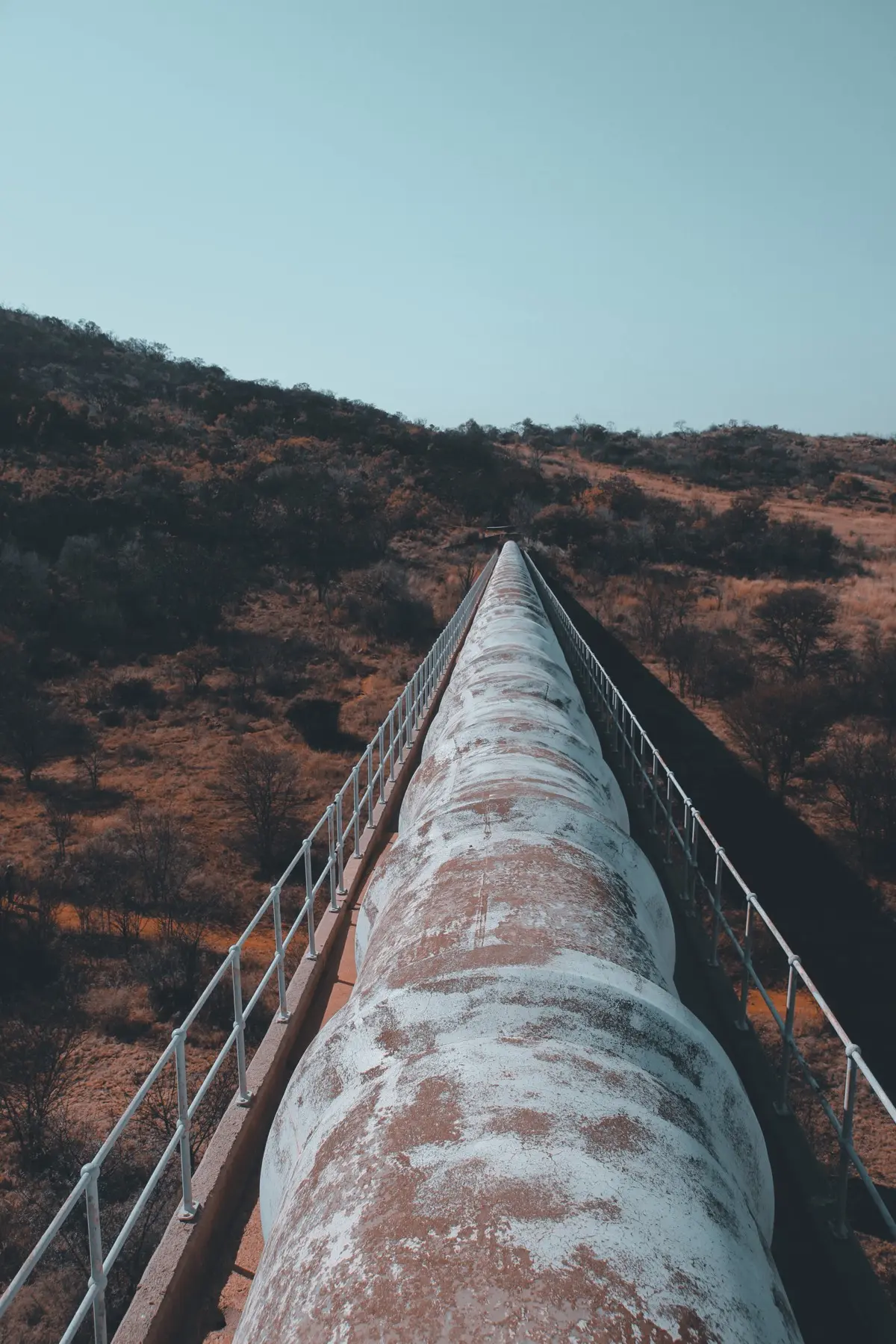
A large white pipeline running up an arid, rust-colored hillside toward the horizon

What compressed air pipeline energy is

Stored medium Air
Held in Pipelines, existing or new
Delivered Electricity and cold air
Compressor drive Gas, then renewables

Compressed air pipeline energy is a way to store energy and deliver it over distance using air instead of wires or batteries. A compressor, driven first by a gas engine and later by a renewable-powered motor, squeezes outside air to pressure. The air is held and transported inside pipelines, which can be newly built or reclaimed from stranded oil and gas service, so the pipe is both the storage vessel and the delivery route. The air can be stored indefinitely and delivered on demand without energy loss. At the point of use, micro-turbines release the air and turn its pressure into electricity. Air leaving a turbine is very cold, and that exhaust is captured to cool homes and data centers. One system therefore delivers two products, power and cold air, from one stored medium. Breeze Inc. designs these systems for community microgrids, long-distance pipeline energy networks and data center cooling.

How it works

One pipeline, four stages. The drive at the compressor end changes over time. The pipeline and the turbines do not.

How the Breeze compressed-air system worksProcess diagram, not to scale. Outside air enters a compressor that is turned through a shaft and coupling by a natural gas engine today; at a later stage an electric motor run on solar or wind power takes the engine's place at the same coupling, and heat and water come off the compressed air at this end as a usable by-product. The compressed air is held in and carried by one continuous pipeline that runs from the compressor to the turbine, with off-ramps along the route where air can be taken off at an energy node. At the point of use the air expands through a turbine whose shaft turns a generator that makes the electricity, with no fuel burned at that end, and the turbine exhaust is cold air used for cooling.Outside air inNatural gasShaftGas enginedrives the compressor todaySolar or windMto the same couplingElectric motorreplaces the gas engine laterCouplingCompressorHeat and water offusable heat, a by-productPipelinestores the compressed air and carries itOff-rampenergy node on the routeShaftTurbineno fuel burned at this endGGeneratorElectricityat the point of useCold airturbine exhaust, used for cooling1234AirElectricityShaftLater stageFuelHeat and waterNot to scaleHow the Breeze compressed-air system worksProcess diagram, not to scale. Outside air enters a compressor that is turned through a shaft and coupling by a natural gas engine today; at a later stage an electric motor run on solar or wind power takes the engine's place at the same coupling, and heat and water come off the compressed air at this end as a usable by-product. The compressed air is held in and carried by one continuous pipeline that runs from the compressor to the turbine, with off-ramps along the route where air can be taken off at an energy node. At the point of use the air expands through a turbine whose shaft turns a generator that makes the electricity, with no fuel burned at that end, and the turbine exhaust is cold air used for cooling.Gas enginedrives the compressor todayNatural gasShaftSolar or windMto the same couplingElectric motorreplaces the gas engine laterCouplingCompressorOutside air inHeat and water offusable heat, a by-productPipelinestores the compressed airand carries itOff-rampenergy node on the routeShaftTurbineno fuel burned at this endCold airturbine exhaust,used for coolingGGeneratorElectricityat the point of use1234AirElectricityShaftLater stageFuelHeat and waterNot to scale
  1. Gas engines drive the compressors

    A natural gas engine turns the compressor, which draws in outside air and squeezes it. The heat given off is a usable by-product.

  2. The pipeline stores the air and carries it

    The air stays in an existing or new pipeline until it is wanted. The same pipe carries it to the point of use, with off-ramps along the route.

  3. Turbines turn generators, and the exhaust is cold air

    At the point of use the air spins a micro-turbine, which turns a generator to make electricity. No fuel is burned there. The very cold exhaust is used for cooling.

  4. Renewable-powered motors replace the gas engines

    As solar or wind is added, an electric motor takes over from the gas engine at the same compressor. The pipeline and turbines stay.

Three ways to use it

Community microgrids

Powerhood

For

Developers and utilities planning microgrids of 150 to 200 homes.

Problem

The building site needs energy before any home exists.

Outcome

A microgrid installed ahead of the homes. It runs pneumatic tools during construction, then supplies electricity and cooling.

About Powerhood microgrids

Pipeline energy storage

CAPS, Compressed Air Pipeline Systems

For

Oil and gas firms and other owners of pipeline infrastructure.

Problem

Stranded oil and gas pipelines sit in the ground with nothing to carry.

Outcome

A long-distance energy delivery network, with nodes along the route for electricity, cooling, EV charging, greenhouses and hydrogen production.

About CAPS pipeline energy storage

Data center cooling

Supplied on site or by pipeline

For

Data center developers and operators.

Problem

Cooling a data hall depends on mechanical chillers.

Outcome

Cold air arrives below zero. It enters standard ventilation after warming to about 22°C, or it chills the water that feeds the chillers, with huge energy savings against mechanical chillers.

About data center cooling
Steel pipes and ducts running up the outside of an industrial building

Common questions

How is this different from a battery?

A battery stores electricity in one place, while Breeze stores energy as compressed air in a pipeline that also carries it to where it is used. The same air then yields both electricity and cold air.

Why start with natural gas?

Gas engines drive the compressors first so a system can be built and put to work, and renewable-powered motors replace the engines later. The compressors, the pipeline and the turbines stay. In short: start with gas, transition to clean.

What happens to the cold air?

It is used for cooling. The turbine exhaust goes to homes on a microgrid, nodes along a pipeline, or a data center.

Who Breeze works with

Utilities

Power and cooling for microgrids.

Oil and gas firms

A second working life for stranded pipelines.

Developers

Power, cooling and construction air for new communities.

Infrastructure owners

Energy nodes for EV charging, greenhouses and hydrogen.

Not at the project stage yet?

Breeze Advisory is our clean-energy consulting practice: strategy and market entry, policy and incentives, project development and risk, supply chain, and finance and investment, with consulting available by the hour.

See Advisory services

Bring us a pipeline, a site or a community plan

Tell us what you have and what it needs to deliver.